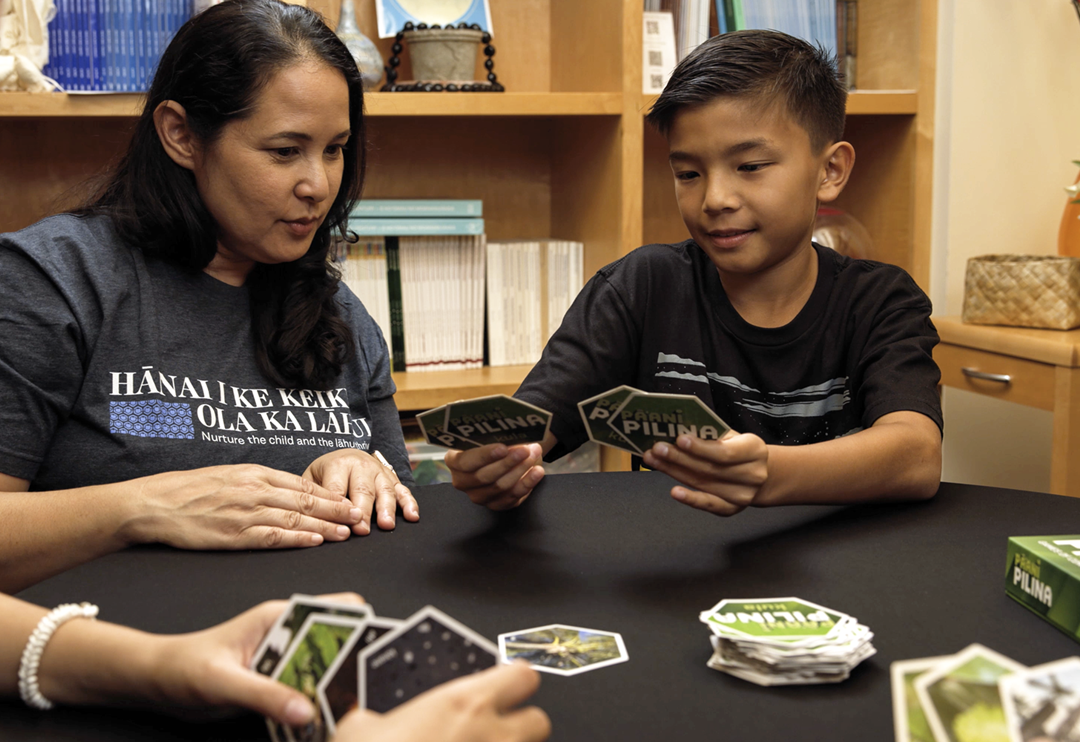

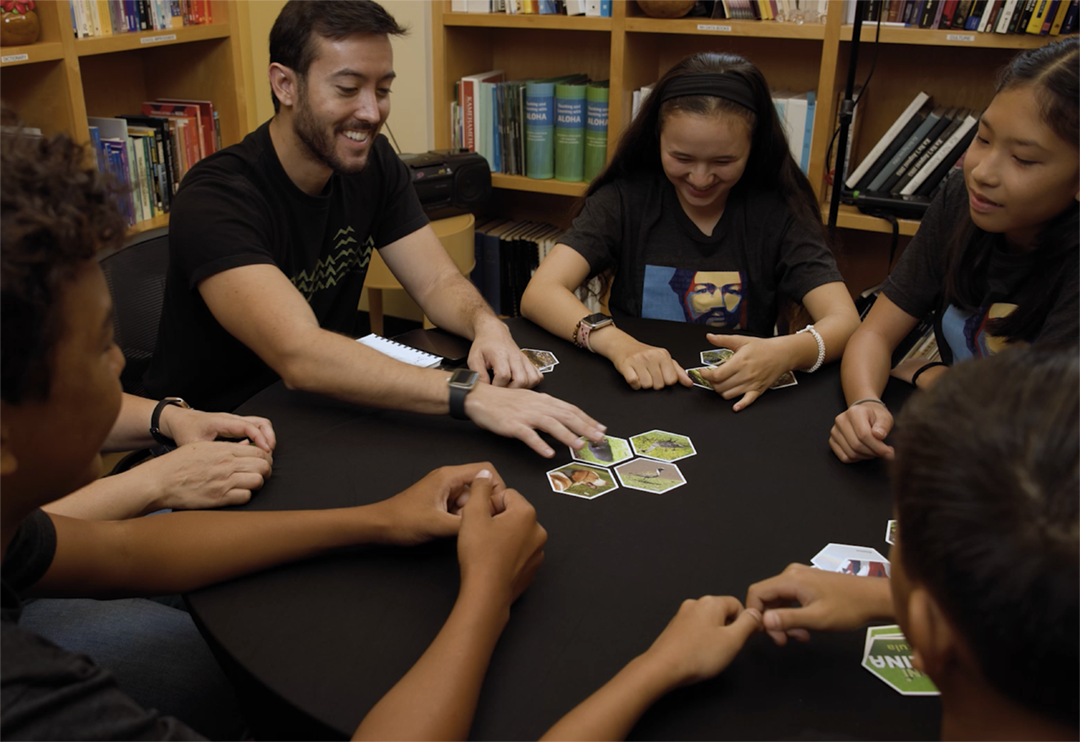
Pāʻani Pilina encourages players to see the relationships in the world around them. Guided by kilo (using your six senses: sight, hearing, smell, taste, touch, and intuition to examine, observe, or forecast), players look for pilina (relationships or connections) between the images on the cards and use their ʻike (knowledge) to strategize, share, and win.
Pāʻani Pilina encourages…
Connection-building play
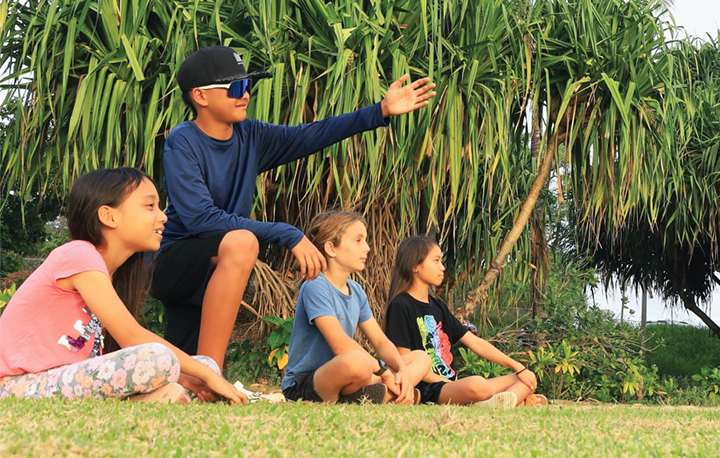
Players of all ages are invited to look closely, think creatively, and discover connections through nature, ʻōlelo, moʻolelo, history, color, category, use, and more.
Conversation and ʻike sharing
Every round sparks discussion as players explain the pilina they see. No background knowledge is needed to play, but the more ʻike players bring—and share—the richer the game becomes.
Rooted in Hawaiian ways of knowing
Through kilo, Pāʻani Pilina encourages observation, intuition, curiosity, and a deeper connection to the world around us.
E kilo, e pili, e lanakila!
Observe, connect, win!
Pāʻani Pilina encourages players to see the relationships in the world around them. Guided by the practice of kilo (using your six senses: sight, hearing, smell, taste, touch, and intuition to examine, observe, or forecast), players look for pilina (relationships or connections) between the images on the cards and use their ʻike (knowledge) to strategize and win.
Pāʻani Pilina encourages …
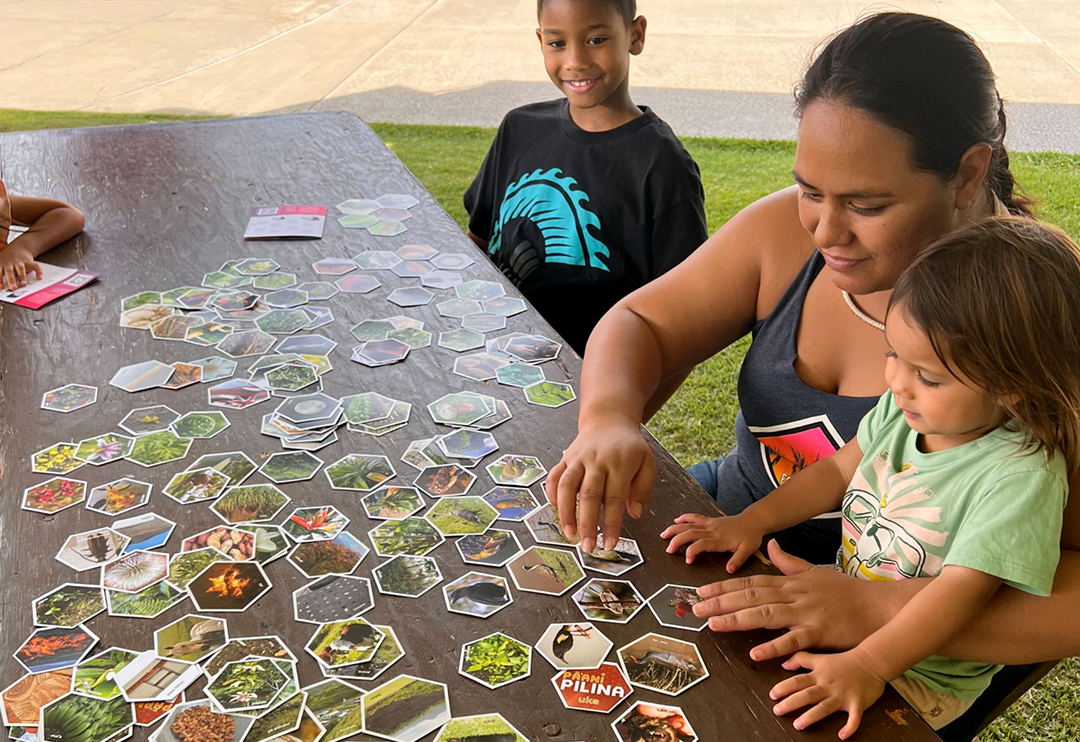
Connection-building play. Players of all ages are invited to look closely, think creatively, and discover relationships between cards through nature, ōlelo, moʻolelo, history, color, category, use, and more.
Conversation and ʻike sharing. Every round sparks discussion as players explain the pilina they see. No background knowledge is needed to play, but the more ʻike players bring—and share—the richer the game becomes.
Rooted in Hawaiian ways of knowing. Through kilo, Pāʻani Pilina encourages observation, intuition, curiosity, and a deeper connection to the world around us.
What’s in the Set?
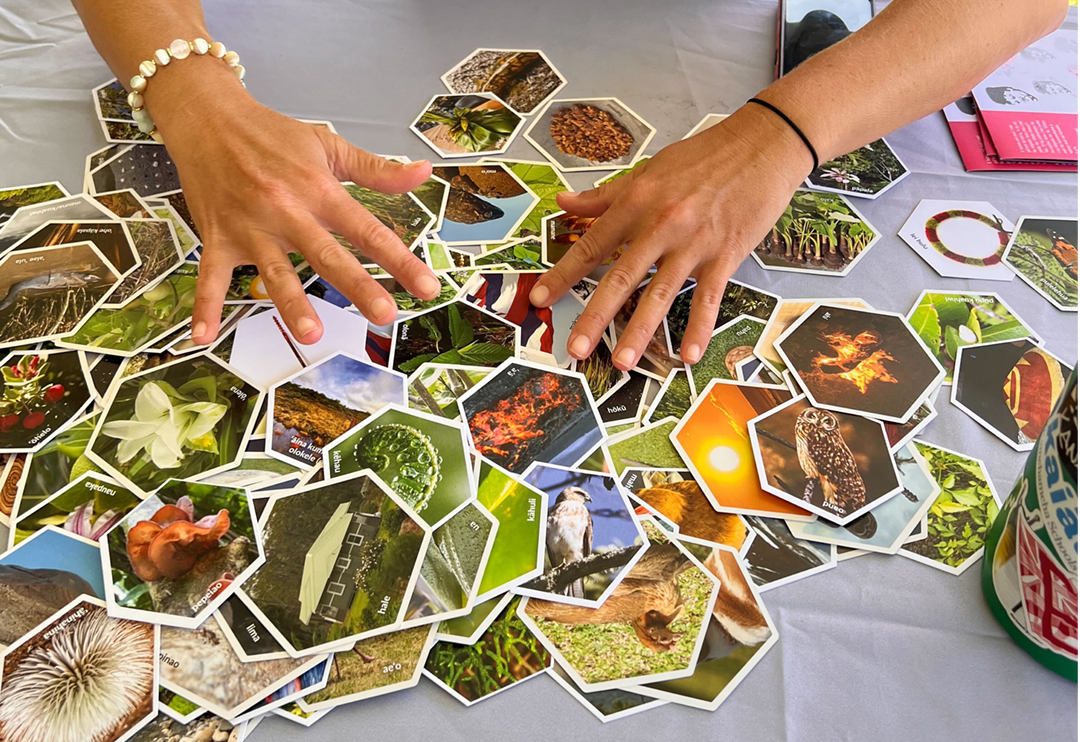
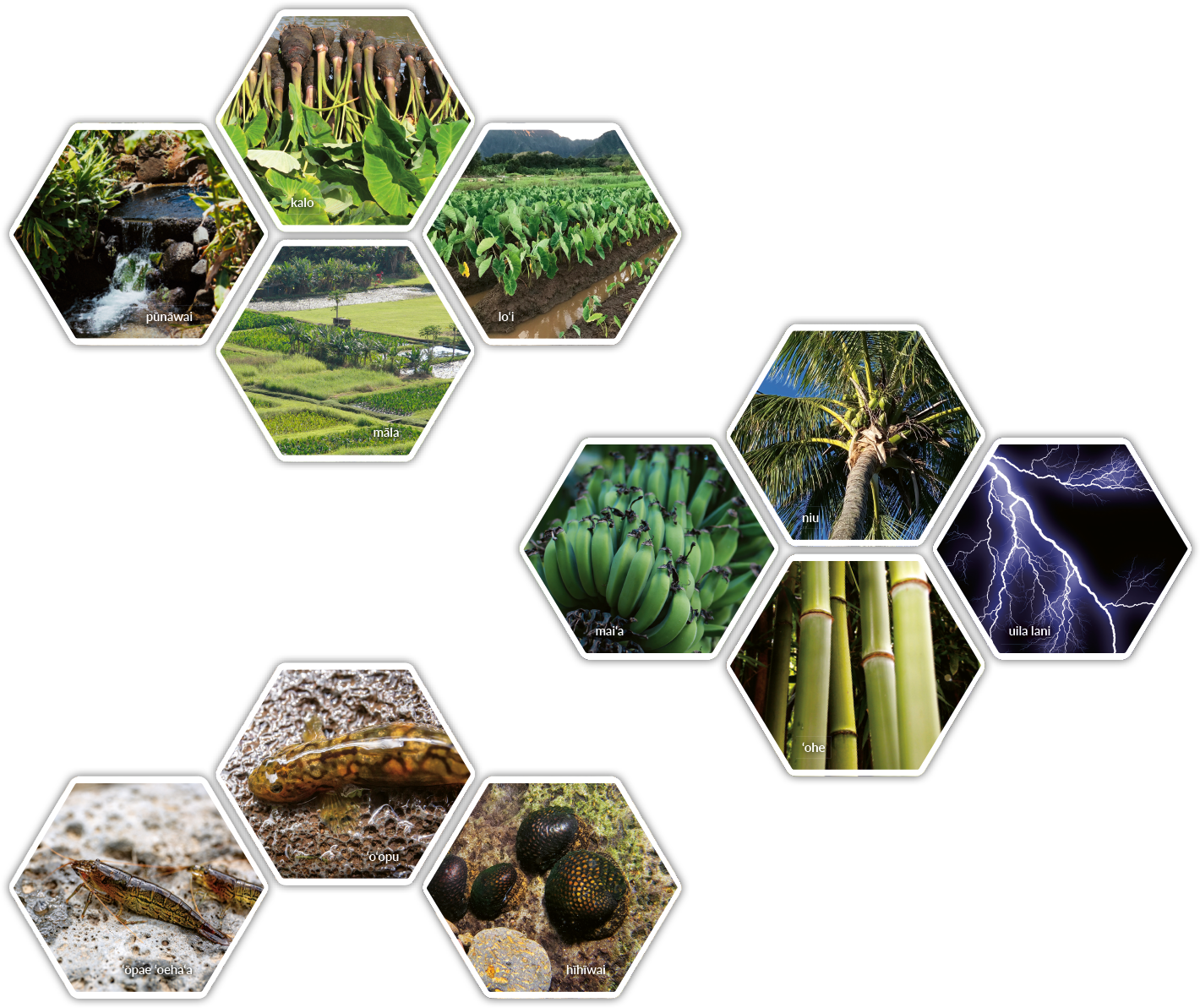
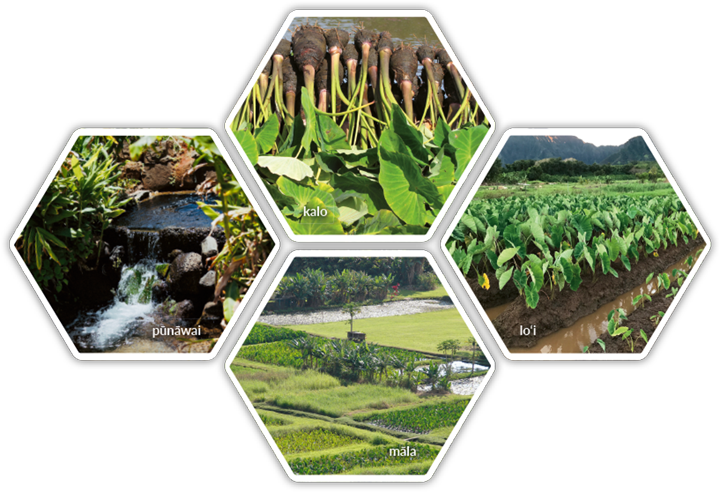
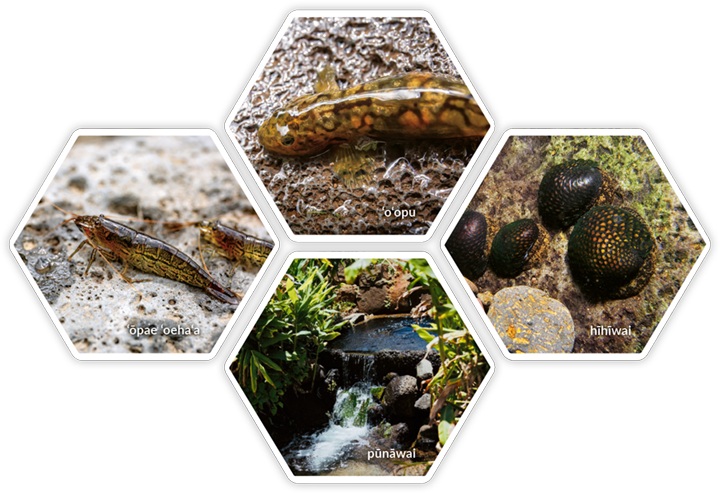
Start with the Kula Set pictured below. Future decks will journey to uka (mountain) regions, kai (shore), and beyond—play them on their own or mix them together.
What’s in the Set?
Start with the Kula Set pictured below. Future decks will journey to uka (mountain) regions, kai (shore), and beyond—play them on their own or mix them together.
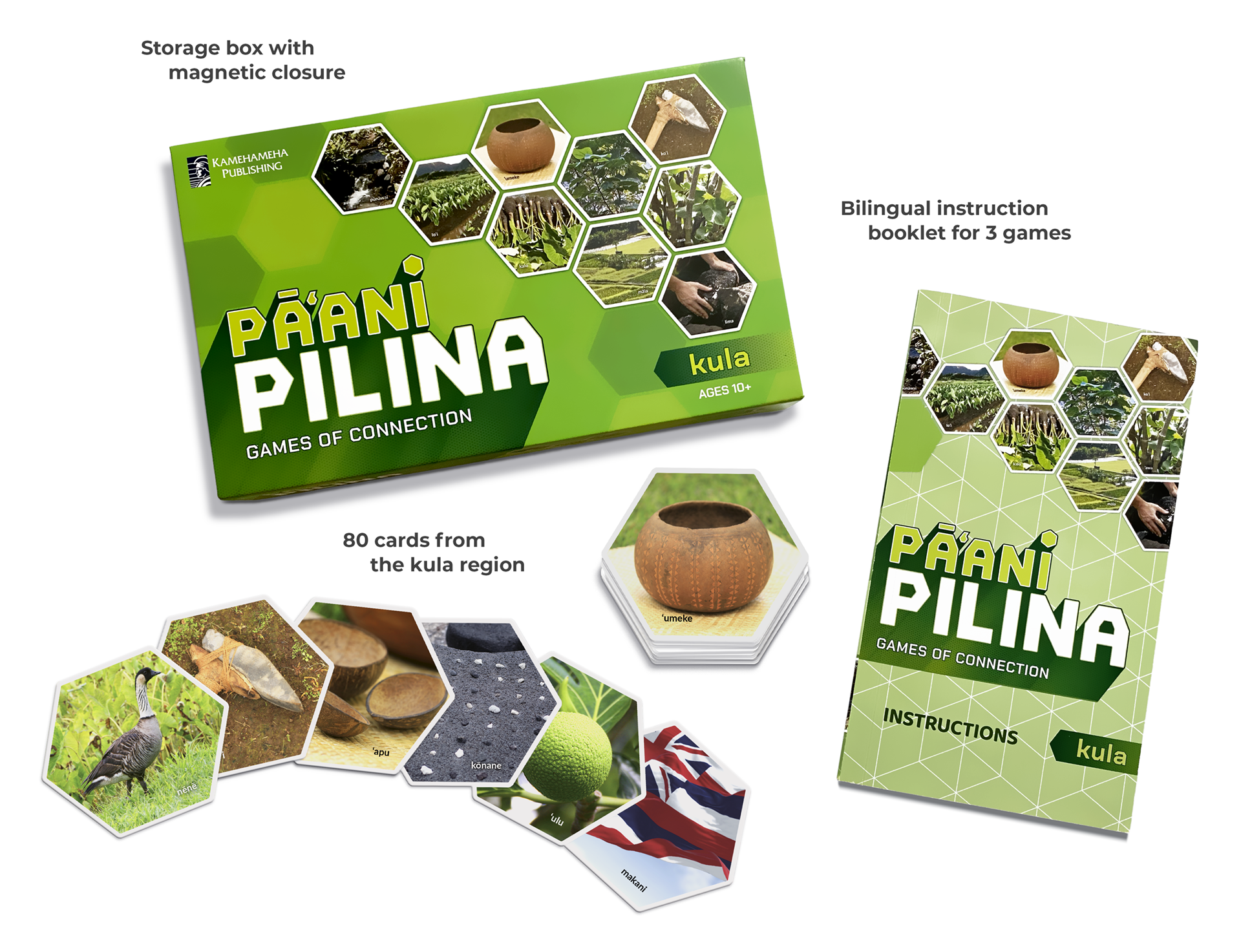
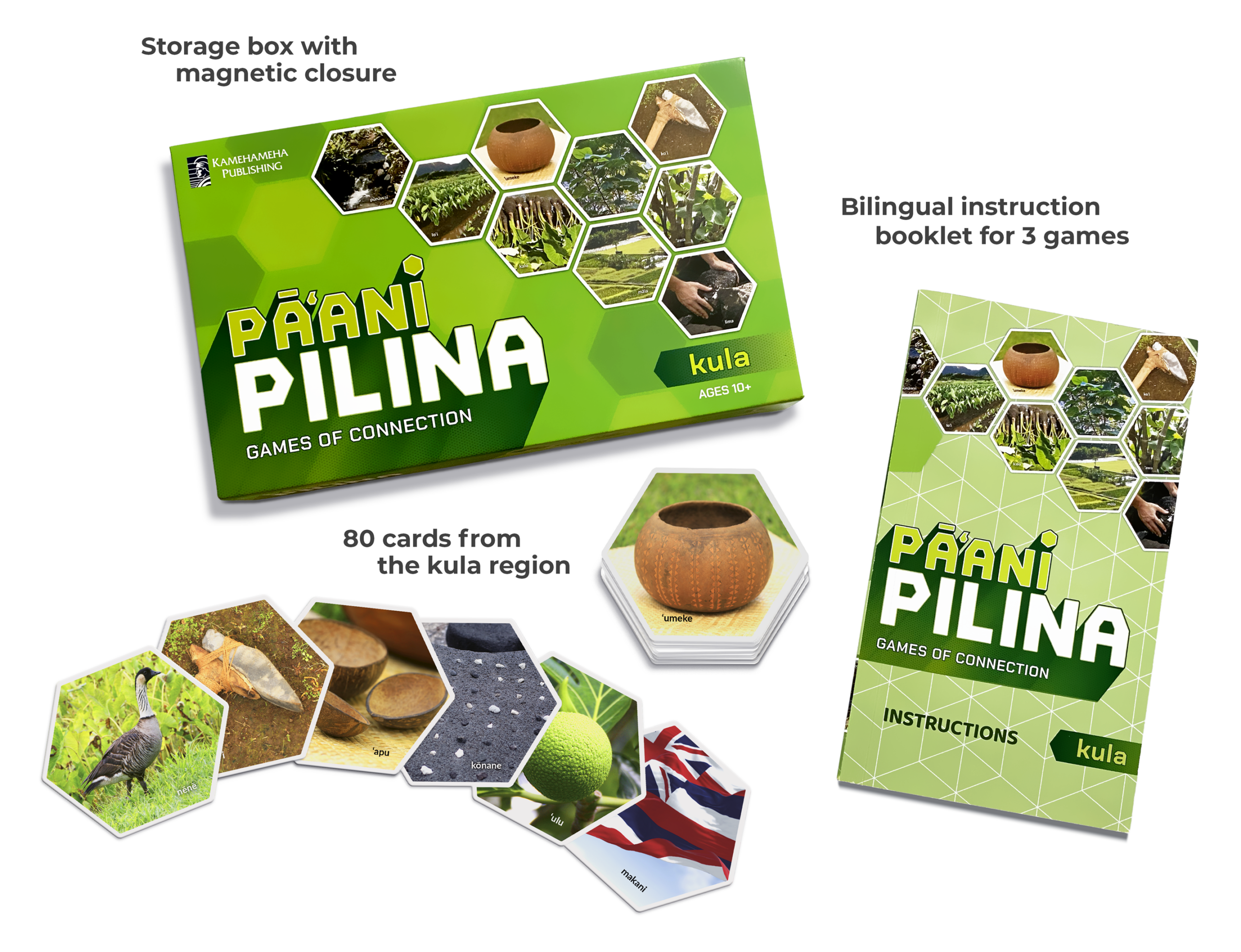
Kula Cards
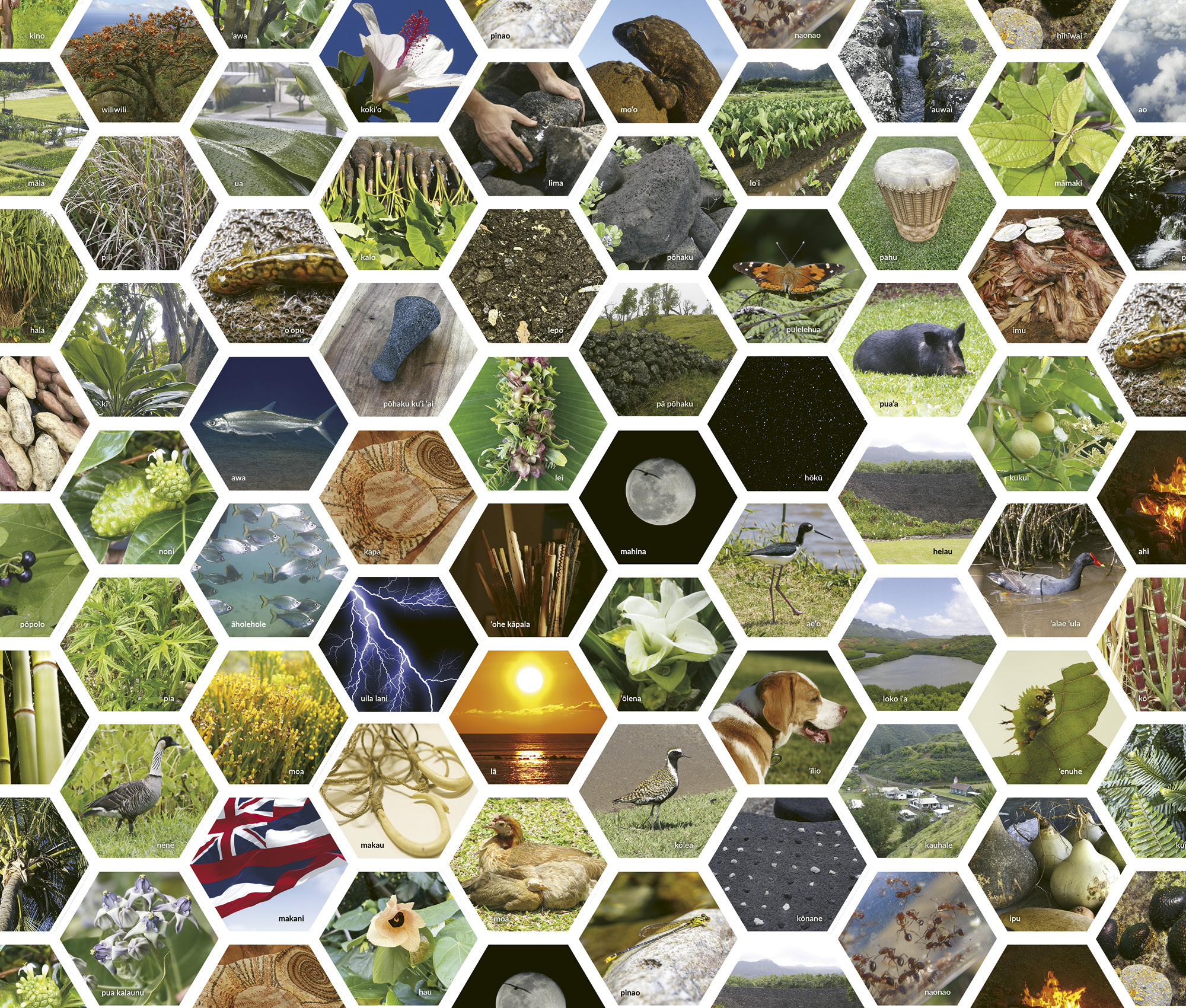
The Kula deck features the plants, animals, landforms, and tools commonly found in the kula region of the ahupua‘a. The kula region lies between the shoreline and start of the mountains, and may be thought of as sloping plains. It is a common area where houses are built, and may also be where crops are grown.
Kula Cards
The Kula deck features the plants, animals, landforms, and tools commonly found in the kula region of the ahupua‘a. The kula region lies between the shoreline and start of the mountains, and may be thought of as sloping plains. It is a common area where houses are built, and may also be where crops are grown.
Bilingual Instruction Booklet
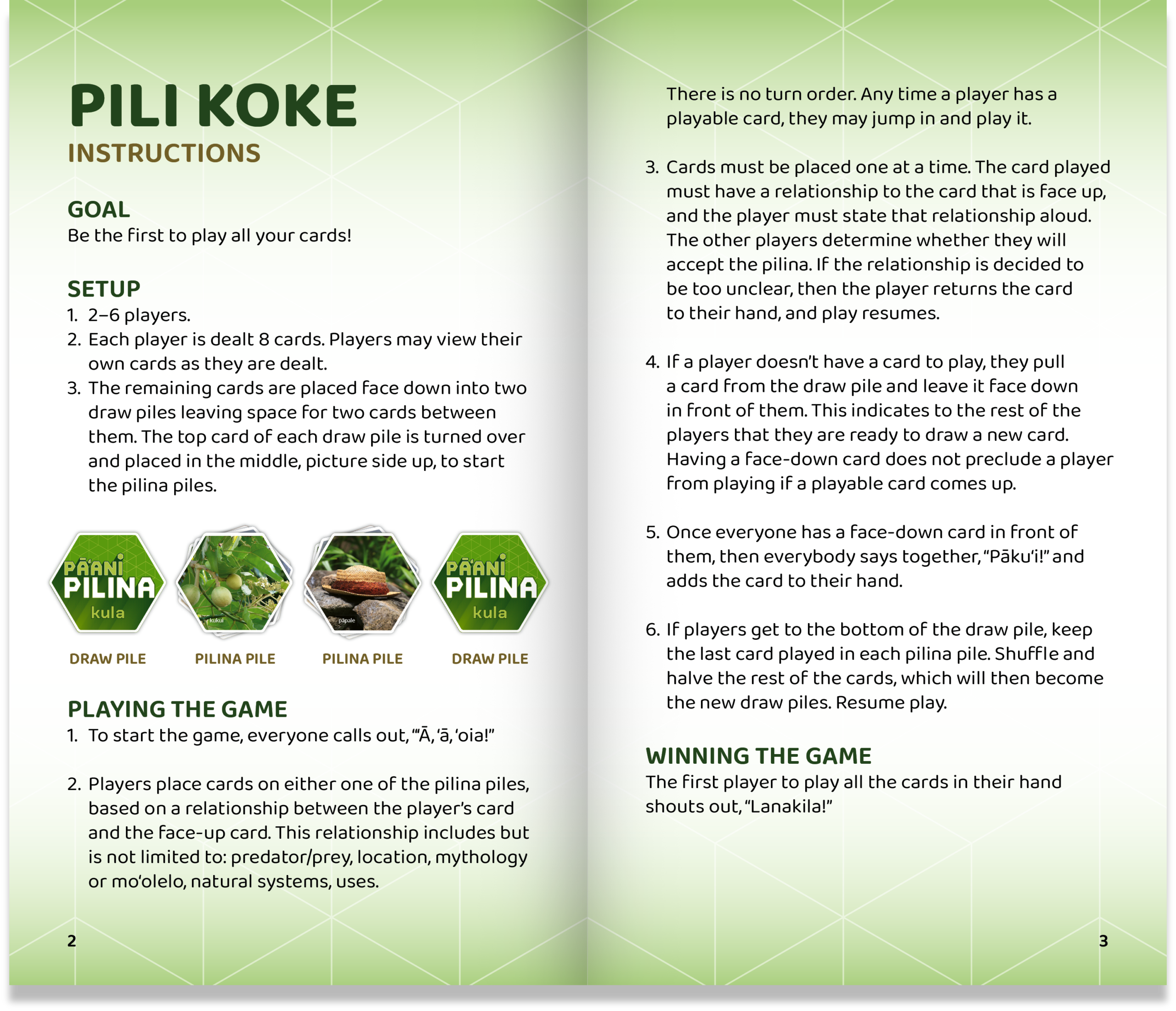
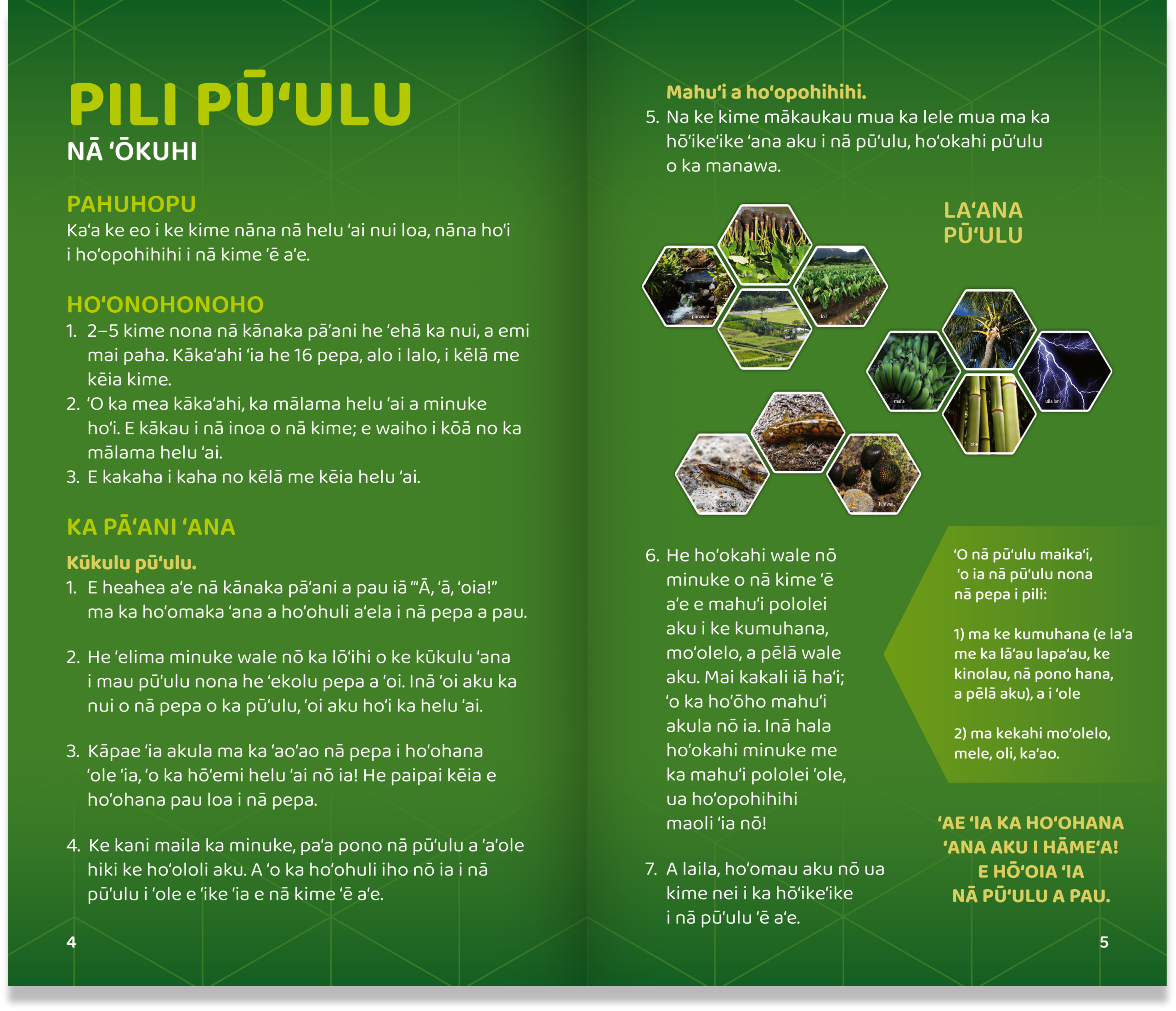
This bilingual instructional booklet provides directions for three games: Pili Koke, Pili Pūʻulu, and Pili Pilina. It also includes a glossary with ʻōlelo Hawaiʻi and English translations for the people, places, objects, and concepts featured across all 80 cards.
Bilingual Instruction Booklet
This bilingual instructional booklet provides directions for three games: Pili Koke, Pili Pūʻulu, and Pili Pilina. It also includes a glossary with ʻōlelo Hawaiʻi and English translations for the people, places, objects, and concepts featured across all 80 cards.